









Flooring Is a Critical Part of Laboratory Design
When designing or refurbishing a science laboratory, flooring is one of the most important components affecting safety, hygiene, durability and long-term maintenance performance. Science laboratories place significantly greater demands on flooring than standard classrooms through exposure to chemicals, staining agents, moisture, heavy traffic and intensive cleaning.
Why Laboratory Flooring Has Different Requirements
School science laboratories require flooring that is non-absorbent, easy to clean, resistant to common laboratory chemicals, resistant to staining and capable of delivering long-term durability. Flooring selection should focus on lifecycle performance rather than initial installed cost.
Ministry of Education Guidance on Laboratory Flooring
The New Zealand Safety and Science/Pūtaiao: Guidance for Aotearoa New Zealand Schools and Kura provides guidance for the design and operation of school science laboratories. Section 13.1 references flooring and surface considerations for laboratory environments, highlighting the importance of materials that are non-absorbent, easy to clean and suitable for areas where chemicals may be routinely used.
Key considerations include:
• Non-absorbent surfaces
• Resistance to common laboratory chemicals
• Stain resistance
• Ease of cleaning and maintenance
• Durability under heavy student traffic
• Compatibility with heat-welded seams and coved skirtings
Why Homogeneous Vinyl Performs So Well in Laboratory Environments
Homogeneous vinyl consists of a single layer of material throughout its thickness. This provides non-absorbent performance, superior cleanability, chemical and stain resistance, wear resistance and low lifecycle maintenance requirements. Heat-welded seams and coved skirtings support hygiene and simplify ongoing cleaning.
Why Grabo Fortis Is Well Suited to Education Laboratories
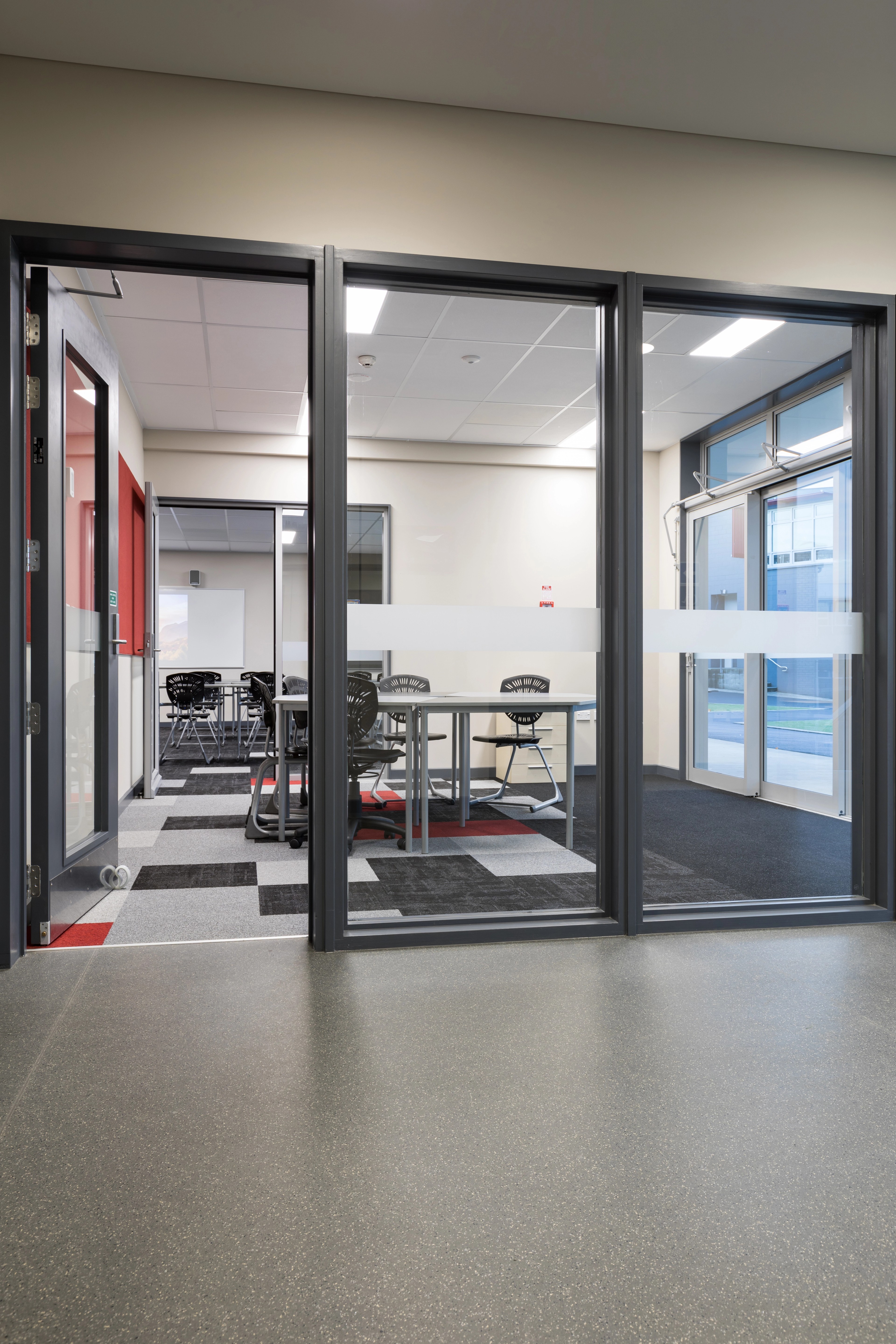
Grabo Fortis is a commercial-grade homogeneous sheet vinyl flooring designed for demanding public environments. Key benefits include homogeneous construction, Group T wear resistance, iGuard PUR surface protection, chemical resistance, stain resistance and long-term durability.
Additional Consideration: PC2 Containment Laboratories
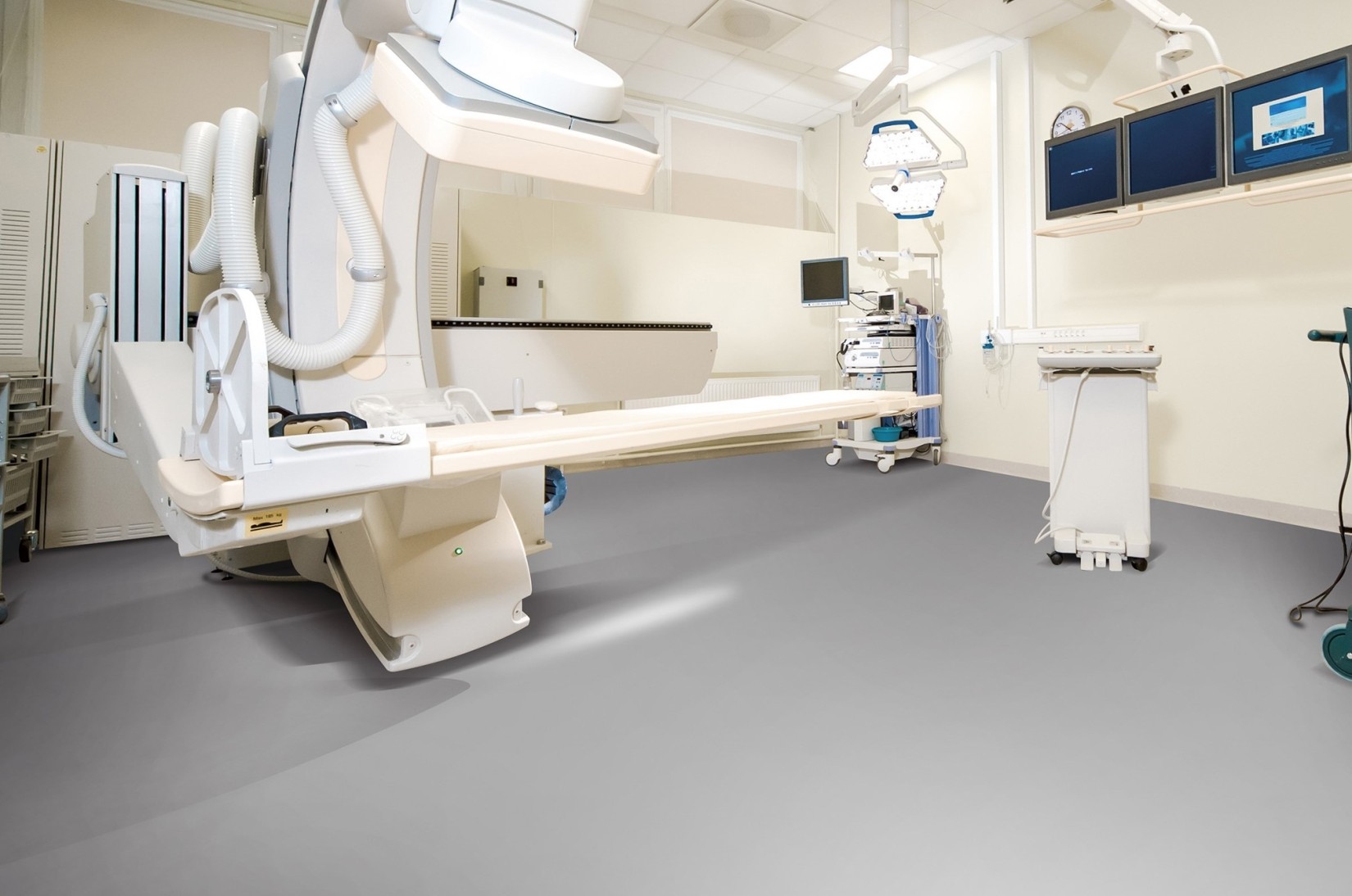
A Physical Containment Level 2 (PC2) laboratory is a specialised facility designed to safely handle low-to-moderate risk biological materials, including Risk Group 2 microorganisms and certain genetically modified organisms. PC2 laboratories typically require smooth, easily cleaned surfaces, reagent resistance, coved floor-to-wall junctions and finishes capable of supporting cleaning and decontamination procedures.
Laboratory Classification and Flooring Requirements
MOE School Laboratory – non-absorbent, chemical resistant, easy to clean and durable.
PC1 Laboratory – hygiene, cleanability and resistance to acids, alkalis and solvents.
PC2 Laboratory – containment, decontamination capability, coved detailing and reagent resistance.
Research Laboratory – project-specific assessment.
Industrial and Pharmaceutical Laboratory – specialist assessment based on chemicals and operational requirements.
Understanding Laboratory Classifications Matters
As facilities move beyond teaching laboratories into PC2, research and industrial environments, additional factors such as biological containment, decontamination procedures, electrostatic control and specialised chemical resistance become increasingly important.
Conclusion
For most Ministry of Education science laboratories, homogeneous sheet vinyl flooring such as Grabo Fortis provides an effective combination of hygiene, cleanability, durability, chemical resistance and lifecycle value. Specialist research and containment environments should always be assessed individually to ensure the flooring system matches the operational risks and performance requirements of the facility.