












Rubber is the default surface for a commercial gym, but the right thickness is not a single number.
You match it to the zone: roughly 6 to 10mm for cardio and circulation, 8 to 12mm for studios and light training, 15 to 20mm for free-weight areas, and 30mm or more (or a dedicated lifting platform) for spaces where loaded barbells are dropped.
Thickness decides how much impact the floor absorbs. Density and construction decide how stable and hard-wearing it is. A good specification gets both right.
Here is the quick version, then the reasoning behind it.
Rubber thickness by gym zone
Cardio, machines and circulation
Typical thickness: 6 to 10mm
Why: Protects the slab and adds comfort underfoot without raising the floor unnecessarily.
Neoflex options: 800 Series rolls, REPtile
Studio, stretching, group fitness and light functional training
Typical thickness: 8 to 12mm
Why: Handles jumping and class work, with more cushioning and sound control.
Neoflex option: REPtile
Free weights, dumbbells and strength floors
Typical thickness: 15 to 20mm
Why: Absorbs weights set down hard and keeps the surface stable underfoot.
Neoflex options: Premium Gym Tile, REPtile, High Impact Tile
Deadlift, Olympic lifting and CrossFit drop zones
Typical thickness: 30mm or more, or a lifting platform
Why: Protects the structure and the bar when loaded weights are dropped from height.
Neoflex option: High Impact Tile
These are starting ranges. The final call depends on how the space is used, how high weights are dropped, what the sub-floor is, and whether the gym sits above other tenancies.
Why thickness is only half the answer
It is easy to assume thicker always means better. It does not. Two things work together: thickness and density.
Thickness is how much material there is to absorb an impact. Density is how well that material resists being crushed, dented, or pushed around. A thick but soft, low-density tile can feel spongy, dent under a rack, and shift when weights land on it. A denser tile gives a more stable surface to lift on and tends to last longer. For impact protection you want the right pairing of the two, not just the biggest number.
The better gym tiles do this on purpose with a two-layer build: a softer lower layer for shock absorption and acoustics, and a high-density top layer for wear and stability. In the Neoflex Premium Gym Tile used at REVL Gym in Wellington, the lower layer sits around 760 kg per cubic metre for shock absorption, and the high-density top layer around 1300 kg per cubic metre for durability, giving roughly a 30% reduction in impact force. That construction is why a well-made 15mm tile can outperform a cheap 20mm mat on a weights floor. So the question to ask a supplier is not just “how thick is it”, but “how is it built, and how dense is the surface”.
Zone by zone
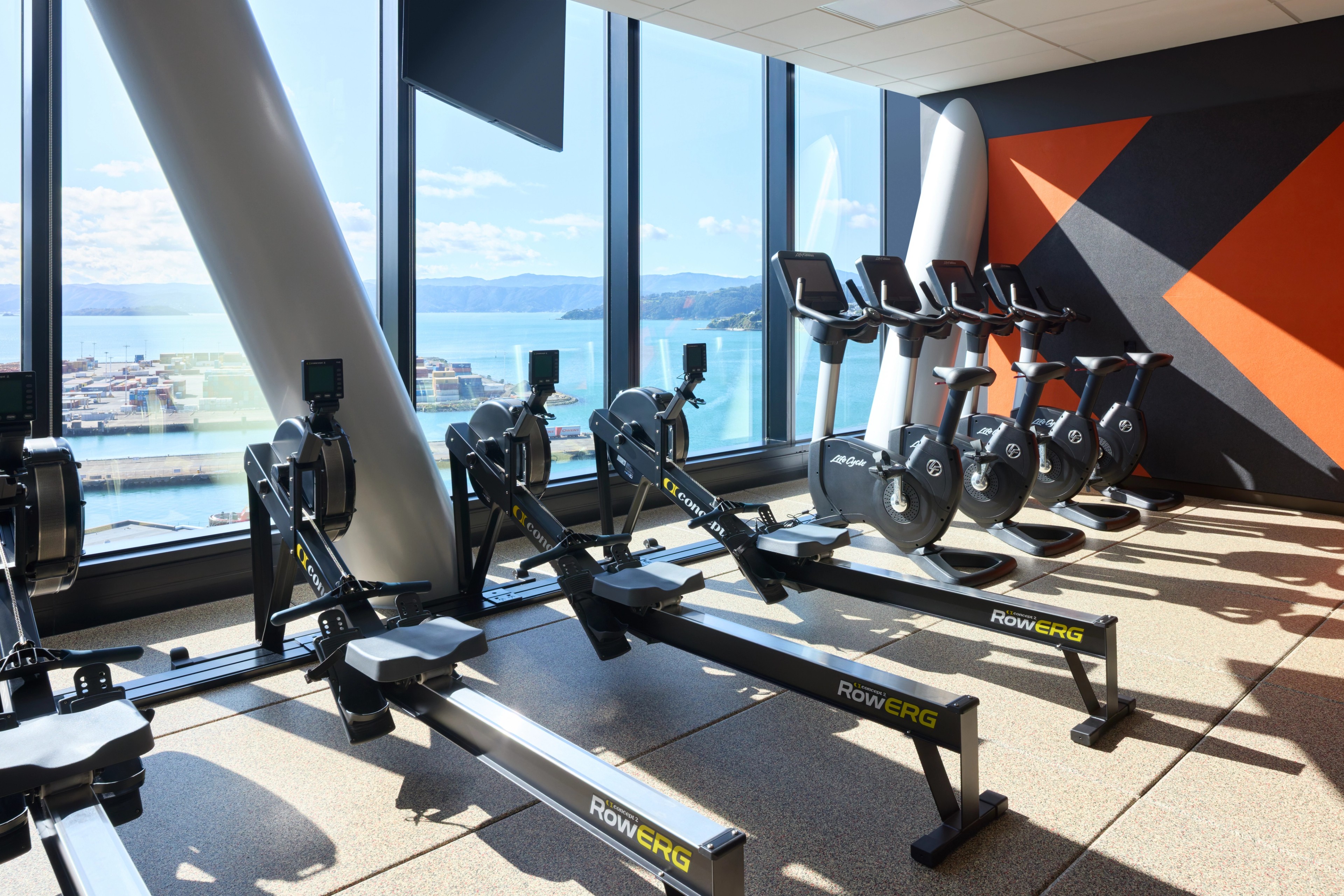
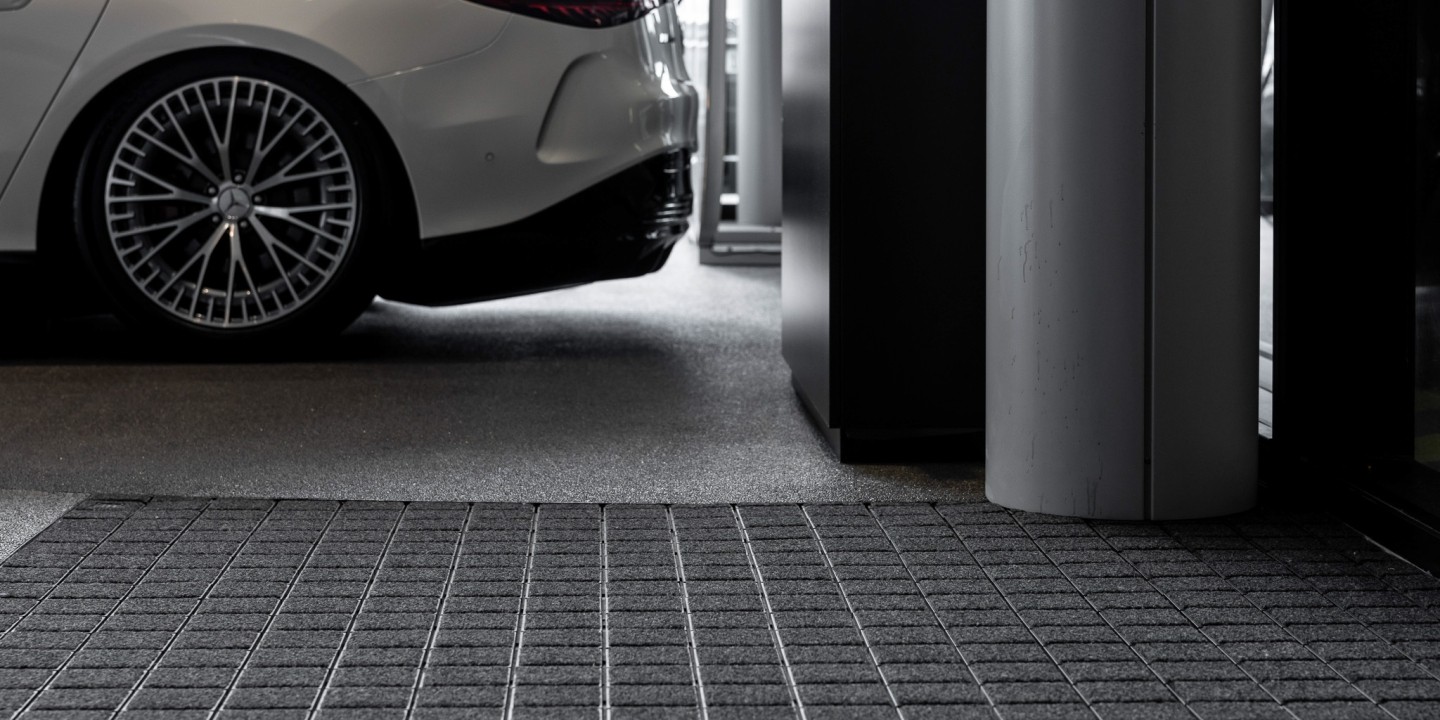
Cardio and circulation. Treadmills, bikes, rowers, pin-loaded machines and walkways do not need much cushioning, but they do need a surface that protects the slab and is comfortable and quiet. Six to 10mm is usually enough, leaning higher in a busy commercial gym. A Neoflex 800 Series roll or a thinner REPtile tile suits this well.
Studios and light training. Group fitness, stretching, yoga and light functional work involve more movement and the odd jump, so a little more thickness helps, around 8 to 12mm. This is also where sound control starts to matter, especially next to quieter spaces.
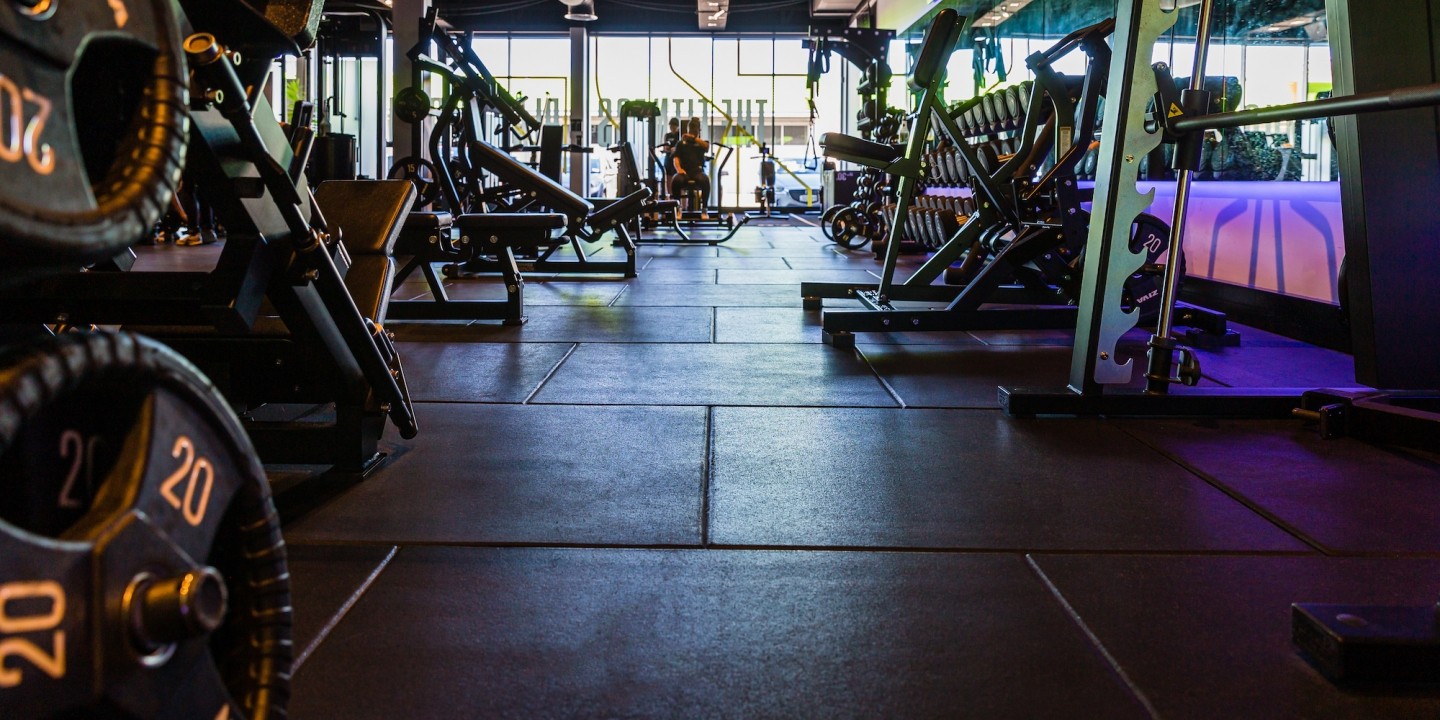
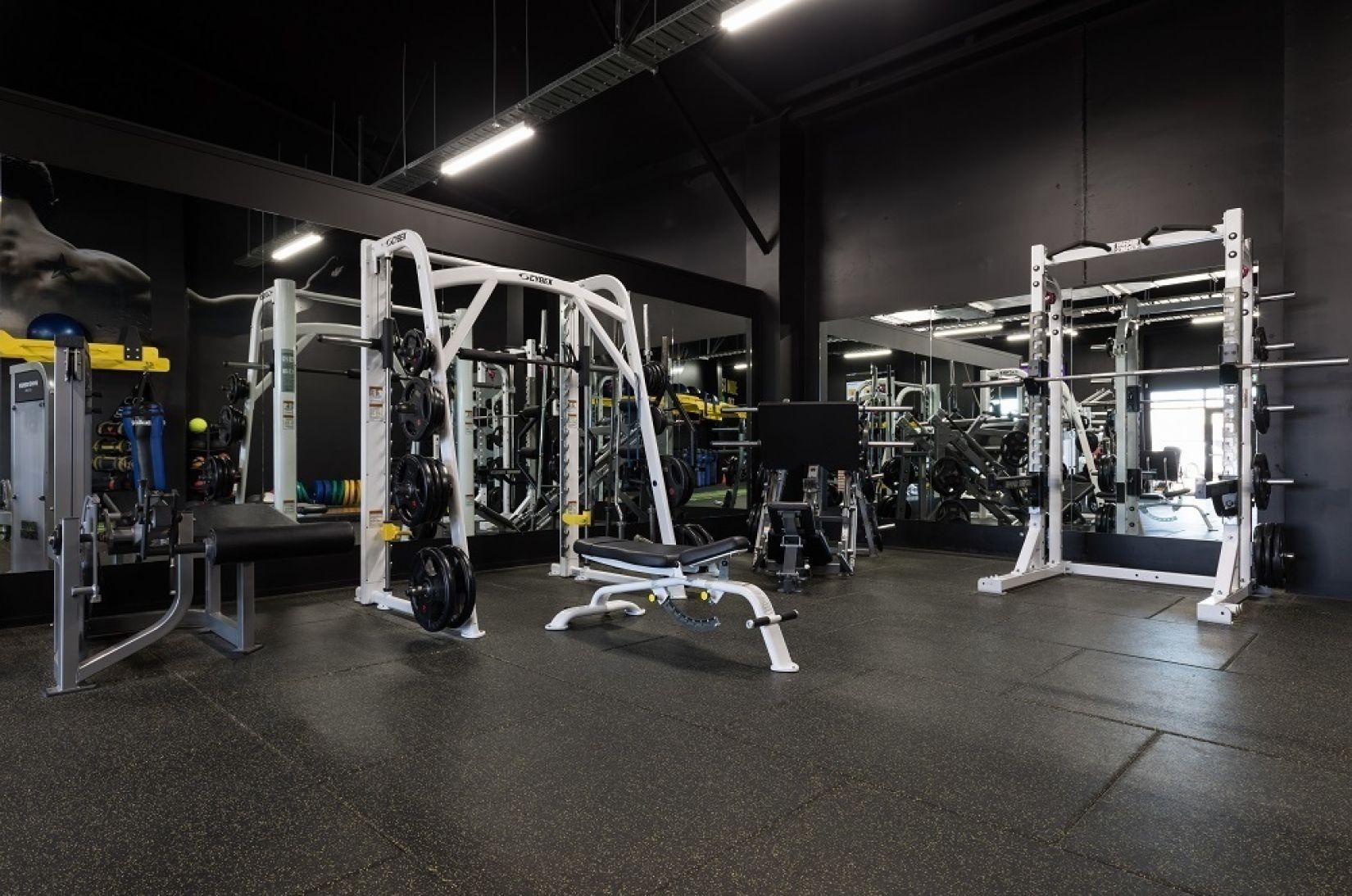
Free weights. This is where thickness earns its keep. Dumbbells and loaded bars get set down hard, and the floor has to absorb that without bouncing or denting. A commercial weights area should not go under 15mm, and 20mm is a safe baseline around racks and dumbbell zones. The 15mm Premium Gym Tile is built for exactly this.
Drop and Olympic zones. If athletes drop loaded barbells from overhead, a standard weights finish is not enough. These zones need heavy impact tiles of 30mm or more, or a purpose-built lifting platform with rubber impact zones. The Neoflex High Impact Tile is made for this, in thicknesses from 20mm up to 100mm. Specifying a 15 or 20mm finish in a dedicated drop zone is the most common and most expensive mistake to fix later.
Do not forget the sub-floor and the neighbours
Rubber that protects a ground-floor concrete slab is not automatically right for an upper floor. If the gym sits above offices, retail, apartments or a car park, dropped weights become a noise and vibration problem for the tenants below, not just a flooring choice. For those projects, get the acoustic build-up specified properly, which may mean an underlay or floating system beneath the rubber. It is far cheaper to design this in than to retrofit it after complaints start. We cover this further in our guides to flooring and acoustic comfort and acoustic damping flooring.
The New Zealand standards to specify
Two things matter for compliance, and both should be backed by test evidence for the actual product, not a brochure claim.
Slip resistance is covered by New Zealand Building Code Clause D1 (Access Routes), with surfaces tested to AS/NZS 4586. For a normal dry training floor a dry result (a coefficient of friction, the measure of grip, of at least 0.40) is usually enough; entries and wet-adjacent areas need a wet rating (a slip resistance value, or SRV, of at least 39). Fire performance for flooring is measured by Critical Radiant Flux (CRF), which is how readily the floor surface will let flame spread, tested to ISO 9239-1, under NZ Building Code Clause C (Protection from Fire). The level you need depends on the space, with exit routes stricter than the gym floor itself, generally in the range of 1.2 to 4.5 kW per square metre. Neoflex products are tested to both. We explain how these ratings actually work in our guides to flooring fire ratings in New Zealand and slip resistance in access routes.
The practical takeaway is simple: when you compare products, ask for the slip and fire test reports, and check the tested build matches what will actually be installed. Advance publishes the fire certificates and BPIR declarations for each Neoflex product on its product pages, so the evidence is there to check.
Common specification mistakes
- Choosing on thickness alone. Density and construction matter too, and a dense, well-built tile will beat a thick, soft one on a weights floor.
- Under-speccing drop zones. A weights-floor thickness under a dedicated lifting or CrossFit area will not protect the structure when loaded bars are dropped.
- Forgetting acoustics on upper floors. Dropped weights travel through the building, so the noise and vibration need to be designed for early.
- Buying on price per square metre. The cheap mat that dents, curls or slides becomes the expensive one once it has to be replaced.
- Accepting “fire rated” or “gym grade” without evidence. Always ask for the AS/NZS 4586 and ISO 9239-1 test reports for the specific product.
Frequently asked questions
Does density matter more than thickness?
They work together. For a stable, durable lifting surface, density is as important as thickness, and a dense tile can outperform a thicker, softer one. For raw impact absorption you still need enough thickness. Specify both, and look at how the tile is built.
What thickness do I need for a drop or Olympic lifting zone?
Use heavy impact tiles of 30mm or more, or a dedicated lifting platform with rubber impact zones. Do not rely on a standard 15 to 20mm weights finish where loaded bars are dropped from height.
Is 12mm or 15mm better for a weights area?
For a commercial weights floor, 15mm is the safer choice and gives more impact buffer, better sub-floor protection and less noise. 12mm can suit lighter free-weight and general training zones, especially where height or budget is tight. In both cases, choose a high-density tile.
Can rubber go over a timber or upper-floor sub-floor?
Yes, but the build-up matters. On upper floors, plan for acoustics and vibration, which usually means an underlay or floating system beneath the rubber. Get it specified for the project rather than assuming the tile alone is enough.
Is recycled rubber as durable as virgin rubber?
Yes. Good recycled rubber flooring is highly durable and hard-wearing, which is why it is used in busy commercial gyms. Neoflex is made largely from recycled EPDM, is PVC-free and low in VOCs, so it also carries a sustainability benefit.
What is the minimum for a commercial weights floor?
A commercial free-weight area should not go under 15mm, with 20mm a safe baseline around racks and dumbbell zones, and more again for drop zones.
Specifying with Advance
The rule holds across the whole floor: match the thickness and the build to what actually happens in each zone, and back the choice with test evidence rather than a brochure claim. Get that right and the floor performs, stays compliant and lasts.
Advance supplies the Neoflex rubber range across the full thickness spread, from thin architectural rolls to heavy impact tiles for drop zones, all PVC-free, with NZ stock options and slip and fire test evidence. As a fourth-generation New Zealand family business, Advance provides full compliance documentation, certifications and warranties through MasterSpec, and has zoned the floors at gyms around the country this way, including REVL Gym Wellington, Lincoln University Gym, Sport Waikato and the Maidstone Sports Hub, matching a heavier tile in the weights room to a lighter one in the studios.
For help matching the right product and thickness to each zone, talk to the Advance specification team or request samples.